
How To Scientifically Configure Energy Storage System Based On The Charge And Discharge Rate Of The Battery?
Jul 06, 2022
What is 0.5C?
Generally the size of the charge and discharge current is commonly used to charge and discharge rate to indicate that: charge rate = charge current / rated capacity,discharge rate = discharge current / rated capacity; for example: rated capacity of 100Ah battery with 50A discharge, its discharge rate 50A/100AH=0.5C. Battery discharge C rate, 1C,0.5C is the rate of discharge of the battery: a measure that indicates the speed of the discharge. The capacity used is discharged in 2 hours, which is called 0.5C discharge.
What is the significance of the 0.5C discharge?
In order to better extend the service life of the battery, we recommend that energy storage batteries do not exceed 0.5C for charging and discharging, so as to maximise the service life of the product, and to achieve a long service life and easy maintenance of the product. Depending on the charging/discharging ratio of 0.5C, if you are configuring an inverter or a lithium battery, we recommend that the capacity of the battery be 2-3 times the power of the inverter.
ONESUN Product Recommendation
ONESUN is positioned as the first brand of long-life energy storage, based on the scientific configuration of the product and the actual use of the customer, a single system you can consider:
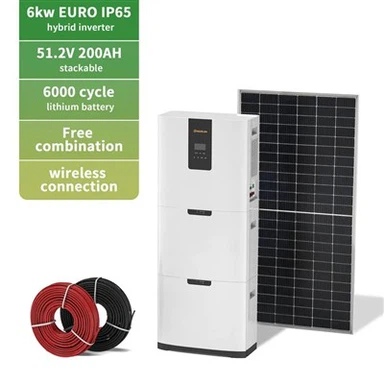
Energy storage all-in-one (inverter, MPPT, lithium battery integration) products: 5KW 10-15KWH;
Separate inverter and lithium battery, 5-8KW inverter, 10-14.4KWH lithium battery;
Scientific configuration, prolong the service life, help the good life.Onesun with you.